
Ibram X. Kendi’s work redefines the conversation on race, urging consistent identification and dismantling of racist structures; a documentary is in development.
The Core Concept of Antiracism
Antiracism isn’t merely the absence of racist beliefs, but an active engagement in opposing racist policies and ideas. It demands a consistent and conscious effort to identify and dismantle racism in all its forms.
Kendi’s framework shifts the focus from individual character to systemic power dynamics. It’s about recognizing that racial inequality isn’t accidental, but the result of deliberate choices and policies.
The core tenet involves actively confronting biases, challenging racist narratives, and advocating for equitable outcomes. It’s a continuous process of self-reflection, education, and action, moving beyond passive tolerance towards proactive change. This requires a commitment to understanding how power operates and how it perpetuates racial disparities.
Ibram X. Kendi’s Contribution
Ibram X. Kendi has become a leading voice in the antiracism movement, fundamentally reshaping the discourse around race and racism. His work moves beyond individual prejudice to examine the systemic nature of racial inequality. He emphasizes that racism isn’t simply individual bias, but a complex system of power and policy.
Kendi’s contribution lies in providing a framework for understanding how racist ideas are created and maintained, and how they impact society. He’s currently developing a documentary based on his bestselling book, expanding its reach and influence.
His work encourages a proactive approach, urging individuals to actively challenge and dismantle racist structures, rather than simply avoiding racist thoughts or actions.
The Significance of the “How to Be an Antiracist” Book
“How to Be an Antiracist” sparked a crucial national conversation, offering a powerful and practical guide to understanding and combating racism. The book’s significance stems from its shift in focus – from merely not being racist to actively being antiracist. It challenges readers to examine their own biases and complicity in perpetuating racial inequality.
Kendi’s work provides a roadmap for dismantling racist policies and systems, advocating for proactive measures to create a more equitable society. The forthcoming documentary adaptation promises to amplify this message, reaching a wider audience.
The book’s impact is evident in its widespread adoption in educational settings and its influence on public discourse.

Understanding the Foundations of Racism
Racism extends beyond individual bias, encompassing systemic structures and historical ideologies that perpetuate inequality; dismantling these requires consistent identification.
Defining Racism: Beyond Individual Bias
Racism is frequently understood as individual prejudice, but this understanding falls short of capturing its full scope and impact. A more comprehensive definition recognizes racism as a multifaceted system encompassing power dynamics and institutional structures. It’s not merely personal belief, but a collection of policies, practices, and norms that systematically disadvantage certain racial groups while benefiting others.
This systemic nature means racism can exist and thrive even without conscious prejudice from individuals. It’s embedded within institutions like education, healthcare, and the legal system, perpetuating inequalities across generations. Recognizing this distinction is crucial for effective antiracist work, shifting focus from individual attitudes to dismantling the systems that uphold racial hierarchy. Kendi’s work emphasizes this crucial shift in perspective.
Systemic Racism Explained
Systemic racism isn’t simply the sum of individual biases; it’s a deeply ingrained network of policies, practices, and beliefs that perpetuate racial inequity. These systems operate across institutions – from housing and employment to education and the justice system – creating barriers for marginalized groups. Historically, discriminatory laws and practices established these disadvantages, and their effects continue today, even in the absence of explicit prejudice.
For example, redlining policies limited access to homeownership for people of color, creating wealth gaps that persist. Similarly, disparities in school funding and access to quality healthcare contribute to ongoing inequalities. Addressing systemic racism requires identifying and dismantling these embedded structures, rather than solely focusing on individual attitudes, as Kendi powerfully advocates.
The History of Racial Ideologies
Racial ideologies haven’t always existed; they are socially constructed beliefs developed to justify power imbalances and oppression. Historically, these ideologies evolved alongside colonialism and slavery, serving to rationalize exploitation and dehumanization. Early justifications often relied on pseudoscientific claims of inherent racial inferiority, attempting to legitimize domination.
Over time, these ideas morphed and adapted, manifesting in various forms of segregation, discrimination, and systemic bias. Understanding this historical context is crucial, as these ideologies continue to influence contemporary attitudes and policies. Kendi’s work emphasizes recognizing how past beliefs shape present realities, and actively challenging those ingrained narratives to build a more equitable future.
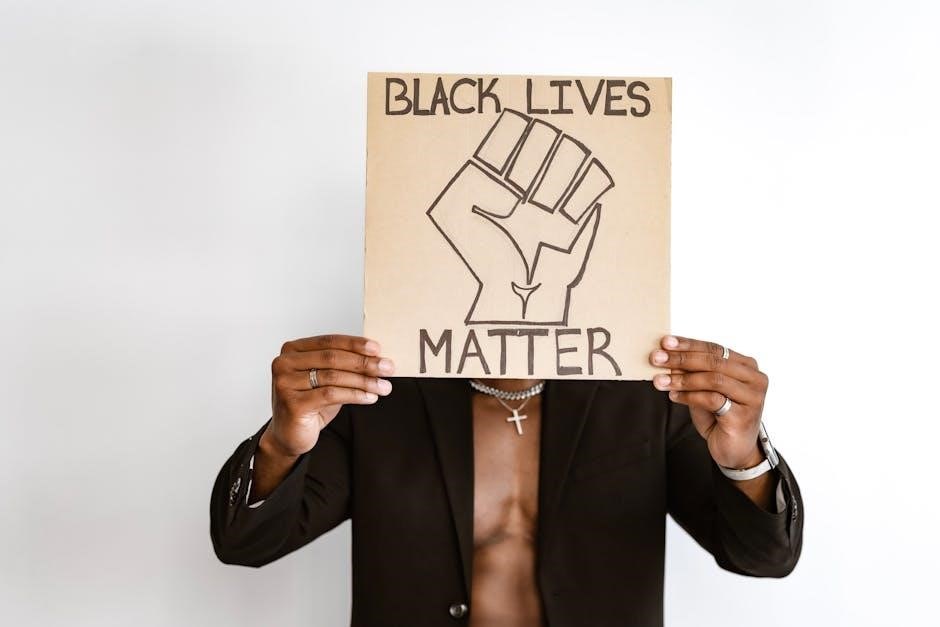
Key Concepts from “How to Be an Antiracist”
Kendi’s framework centers on identifying and challenging biases, recognizing a spectrum of ideas, and understanding how power perpetuates racial inequality within systems.
Identifying and Challenging Racial Bias
A core tenet of antiracism, as championed by Ibram X. Kendi, involves a continuous and critical self-assessment to uncover personal biases. This isn’t about labeling oneself as “good” or “bad,” but recognizing the ingrained societal influences that shape perceptions. Challenging these biases requires active listening, empathy, and a willingness to confront uncomfortable truths about racial dynamics.
The process extends beyond individual introspection. It demands a proactive dismantling of racist policies and systems, recognizing that bias isn’t solely individual but deeply embedded within institutions. Kendi’s work emphasizes that identifying bias is only the first step; consistent action is crucial to counteract its effects and foster genuine equity. This includes questioning assumptions and advocating for inclusive practices.
The Spectrum of Racist and Antiracist Ideas
Ibram X. Kendi posits that racism and antiracism aren’t fixed states, but rather exist on a spectrum of ideas and actions. There is no neutral ground; inaction perpetuates racism. Every policy, every belief, either contributes to or combats racial inequity. Understanding this spectrum is vital for self-reflection and societal change.
Kendi challenges the notion of “not racist” as insufficient, advocating for active antiracism. This involves consistently identifying and opposing racist policies, even those seemingly benign. The spectrum highlights that even well-intentioned ideas can have racist consequences if they uphold unequal power structures. Recognizing this nuance is key to moving beyond passive tolerance towards genuine racial justice and equity for all.
Power and Racial Inequality
Kendi’s framework centers power as the core driver of racial inequality. Racial disparities aren’t simply the result of individual prejudice, but are systematically created and maintained by power structures. These structures benefit those in power, often at the expense of marginalized racial groups. Antiracism, therefore, necessitates a focus on dismantling these power imbalances.
He argues that power dictates who defines “racist” and “antiracist,” highlighting the importance of challenging dominant narratives. True equity requires redistributing power and resources, not merely changing individual attitudes. Understanding the historical and contemporary ways power operates is crucial for effective antiracist action and achieving lasting social justice.
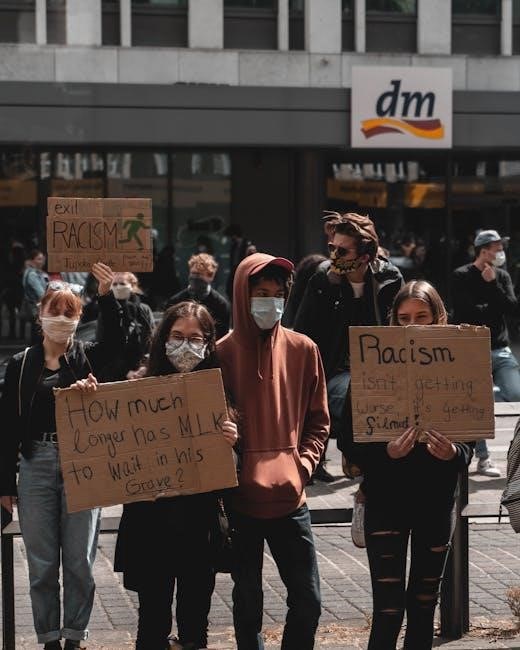
Practical Steps Towards Antiracism
Antiracism demands self-reflection, education, active listening, and empathy, alongside challenging policies and systems perpetuating racial inequality for meaningful change.
Self-Reflection and Education
Embarking on an antiracist journey necessitates honest self-examination, confronting personal biases and privileges. This involves acknowledging how societal structures have shaped individual perspectives and understanding the impact of internalized racism. Continuous education is paramount; delve into the history of racial ideologies and systemic racism, expanding knowledge beyond surface-level understanding.
Explore diverse voices and perspectives, actively seeking out literature, documentaries, and resources created by people of color. Question assumptions and challenge ingrained beliefs, recognizing that antiracism is an ongoing process of learning and unlearning. It’s about moving beyond simply not being racist to actively working against racism in all its forms, both internal and external.
Active Listening and Empathy
Genuine antiracist work demands prioritizing the lived experiences of marginalized communities. This begins with active listening – truly hearing and validating the perspectives of people of color without interruption or defensiveness. Cultivate empathy by attempting to understand the emotional and psychological impact of racism, recognizing that experiences differ greatly.

Resist the urge to center your own feelings or offer unsolicited advice; instead, focus on creating space for others to share their stories. Acknowledge the pain and trauma caused by racism, and commit to believing those who share their experiences. Empathy fuels understanding, and understanding is crucial for effective allyship and dismantling systemic inequities.
Challenging Racist Policies and Systems
Antiracism isn’t solely about individual beliefs; it requires actively confronting and dismantling racist policies and systems. This involves identifying inequities embedded within institutions – education, healthcare, criminal justice, and employment – and advocating for systemic change. Support policies that promote racial equity and challenge those that perpetuate disparities.
Engage in political action, contacting elected officials, and supporting organizations working for racial justice. Recognize that dismantling systemic racism is a collective effort, requiring sustained commitment and collaboration. Be willing to disrupt the status quo and challenge power structures that maintain racial hierarchies, striving for a more just and equitable society for all.

Applying Antiracist Principles in Daily Life
Embrace consistent antiracist action in all spheres – workplace, education, and relationships – by challenging biases and advocating for equitable practices daily.
Antiracism in the Workplace
Cultivating an antiracist workplace demands proactive measures beyond simply avoiding discriminatory practices. It requires a fundamental shift in organizational culture, prioritizing equity and inclusion at every level. This begins with critically examining hiring processes to eliminate bias, ensuring diverse candidate pools, and implementing blind resume reviews.
Furthermore, fostering psychological safety is crucial, allowing employees to voice concerns about racial injustice without fear of retribution. Regular diversity, equity, and inclusion (DEI) training, led by qualified facilitators, can raise awareness and equip staff with the tools to challenge biased behaviors.
Leadership must actively champion antiracist policies and hold individuals accountable for upholding them. Transparent pay audits and promotion practices are essential to address systemic inequalities. Ultimately, an antiracist workplace isn’t just about compliance; it’s about creating a truly equitable and just environment where all employees can thrive.
Antiracism in Education
Transforming education into an antiracist space necessitates a comprehensive overhaul of curricula and pedagogical approaches. This involves moving beyond simply acknowledging diverse perspectives to actively centering the experiences and histories of marginalized groups. Educators must critically examine their own biases and actively work to dismantle them.
Curricula should be inclusive, representing a multitude of voices and challenging dominant narratives. Culturally responsive teaching practices, which acknowledge and value students’ cultural backgrounds, are paramount. Furthermore, schools must address disparities in discipline, ensuring equitable treatment for all students.
Creating safe spaces for dialogue about race and racism is vital, fostering critical thinking and empathy. Antiracist education isn’t about guilt or blame; it’s about empowering students to become agents of change and build a more just future.
Antiracism in Personal Relationships
Antiracism extends beyond public activism and deeply impacts our personal connections. It requires consistent self-reflection, acknowledging our own biases, and actively challenging prejudiced thoughts and behaviors within our closest relationships. This means being willing to have uncomfortable conversations with family and friends about race and racism.
Active listening and empathy are crucial; truly hearing and validating the experiences of others, especially those from marginalized communities, is essential. It also involves recognizing our privilege and using it to amplify the voices of others.

Antiracist relationships are built on mutual respect, accountability, and a commitment to continuous learning and growth. It’s a lifelong journey, not a destination.
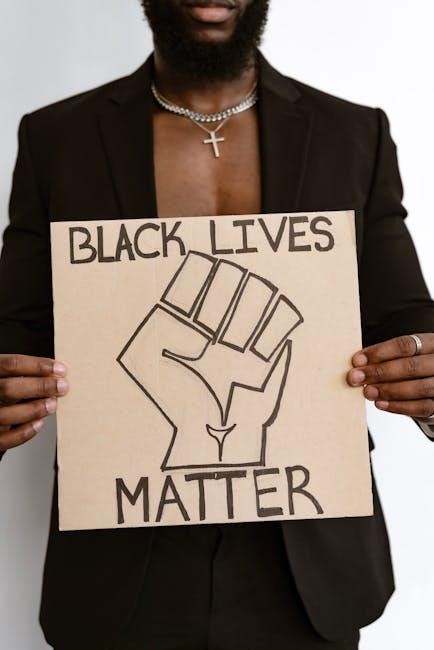
Resources for Continued Learning
Explore diverse readings beyond Kendi’s work, utilize online organizations dedicated to racial justice, and engage with impactful documentaries and films on the subject.
Recommended Reading Beyond Kendi
Expanding your understanding of antiracism necessitates exploring a diverse range of voices and perspectives. Michelle Alexander’s “The New Jim Crow” offers a critical examination of mass incarceration and its racial implications, revealing systemic inequalities within the justice system.
Ta-Nehisi Coates’ “Between the World and Me” presents a powerful letter to his son, grappling with the realities of being Black in America and the enduring legacy of racism.
Furthermore, Isabel Wilkerson’s “Caste: The Origins of Our Discontents” draws parallels between the American caste system and those in India and Nazi Germany, illuminating the pervasive nature of hierarchical structures.
These texts, alongside others, provide crucial context and deepen engagement with the complexities of racial justice, complementing Kendi’s foundational work.
Online Resources and Organizations
Numerous online platforms and organizations actively promote antiracist education and advocacy. Showing Up for Racial Justice (SURJ) is a national network mobilizing white people for racial justice, offering resources and local organizing opportunities. The NAACP provides historical context and current initiatives fighting for civil rights.
Learning for Justice (formerly Teaching Tolerance) offers educational resources for educators and families, fostering inclusive classrooms and communities.
Color of Change champions online campaigns addressing racial injustice, leveraging digital tools for impactful change. Additionally, The Antiracism Project provides toolkits and workshops for individuals and organizations committed to dismantling systemic racism. These resources facilitate continuous learning and active participation.
Documentaries and Films on Racial Justice

Several impactful documentaries and films explore the complexities of race and injustice, fostering critical understanding. “13th” by Ava DuVernay examines the intersection of race, justice, and mass incarceration in the United States, offering a powerful historical analysis.
“I Am Not Your Negro” based on James Baldwin’s unfinished manuscript, provides a poignant reflection on race in America. “Eyes on the Prize” chronicles the Civil Rights Movement, showcasing pivotal moments and courageous activists.
“Time” offers a deeply moving portrayal of the impact of the criminal justice system on families. These films serve as vital educational tools, prompting dialogue and inspiring action towards racial equity and justice.
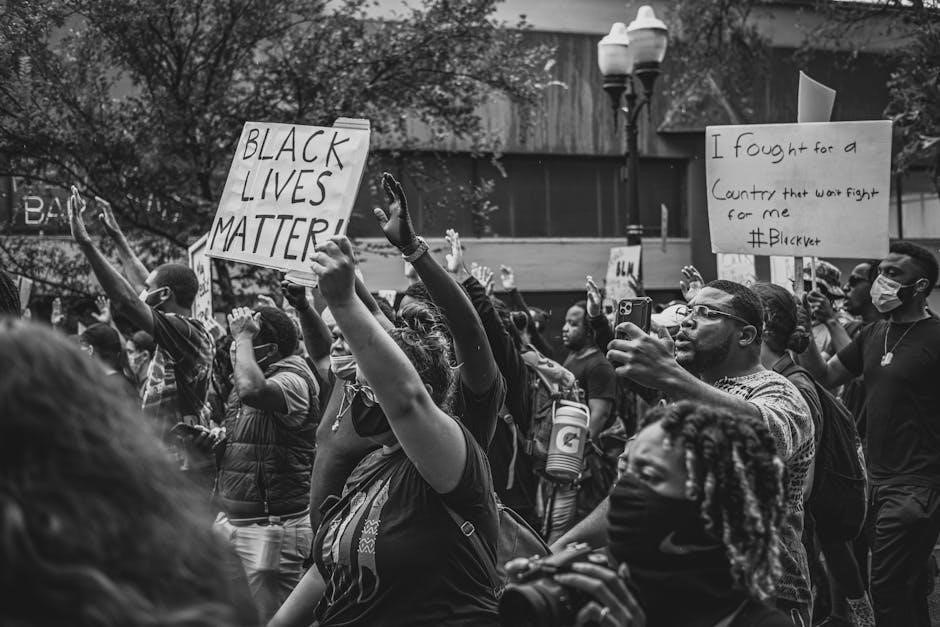
Criticisms and Considerations of the Antiracist Framework
Antiracism faces misconceptions, including concerns about “reverse racism,” but Kendi’s framework continually evolves, prompting ongoing discussion and refinement of its principles.
Common Misconceptions About Antiracism
A prevalent misunderstanding equates antiracism with simply opposing overt prejudice, neglecting the crucial element of actively dismantling systemic barriers. Many believe antiracism demands blaming individuals, however, Kendi emphasizes focusing on policies and power structures. Another misconception frames antiracism as inherently divisive, ignoring its goal of creating a more equitable society for all.
Furthermore, some wrongly assume antiracism necessitates constant guilt or self-flagellation, while it’s about continuous learning and accountability. The idea that antiracism is a fixed destination, rather than an ongoing process, is also inaccurate. It’s not about achieving “perfection,” but consistent effort. Finally, confusing equality with equity is common; antiracism prioritizes equity—addressing historical disadvantages—not merely treating everyone the same.
Addressing Concerns About “Reverse Racism”
The concept of “reverse racism” – discrimination against dominant groups – is a frequent concern. However, antiracist thought clarifies that racism is inextricably linked to systemic power imbalances. While prejudice can be experienced by anyone, racism requires both prejudice and power to manifest as systemic oppression. Historically, and presently, marginalized groups lack this institutional power.
Therefore, actions that disadvantage a historically dominant group, while potentially unfair, do not equate to racism. Antiracism aims to redistribute power, leveling the playing field, not simply reversing discrimination. Focusing on “reverse racism” often deflects from addressing the deeply entrenched disadvantages faced by racialized communities. It’s crucial to acknowledge historical context and ongoing systemic inequalities.
The Ongoing Evolution of Antiracist Thought
Antiracism isn’t a static endpoint, but a continuous process of learning, unlearning, and adaptation. Ibram X. Kendi’s work sparked vital conversations, yet the field continues to evolve with new scholarship and lived experiences. Critical Race Theory and intersectionality further refine our understanding of how race intersects with other forms of oppression.
Contemporary antiracist thought emphasizes the importance of centering marginalized voices and challenging dominant narratives. It acknowledges the complexities of identity and the need for nuanced approaches to dismantling systemic inequalities. The ongoing dialogue necessitates self-reflection, accountability, and a commitment to lifelong learning, ensuring antiracism remains dynamic and responsive to evolving social realities.